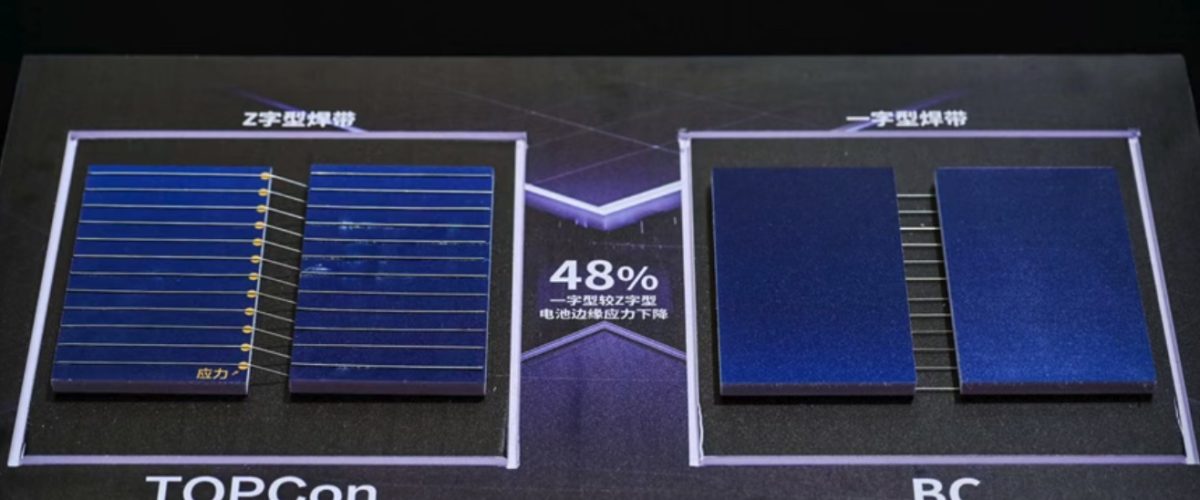
A Back Contact (BC) or Interdigitated Back Contact (IBC) solar cell is an advanced photovoltaic technology where all electrical contacts are placed exclusively on the rear side of the cell. This design eliminates metal gridlines from the sun-facing front surface, allowing for unobstructed light capture. First conceptualized in 1975, BC technology has evolved into one of the most efficient solar solutions available today.
![placeholder_image]BC solar cells eff
How It Works
Unlike conventional solar cells that use front-side metal grids to collect current, BC cells relocate the entire electrical contact structure to the back. This maximizes the active light-receiving area on the front, reducing shading losses and enabling higher energy conversion.
Key Advantages
1. Enhanced Efficiency
No Front Shading: Absence of front gridlines allows more sunlight to reach the cell, boosting electricity generation.
Full Surface Utilization: The entire front side is dedicated to light absorption, optimizing performance.
2. Superior Aesthetics
Clean, Uniform Look: The seamless front surface offers an aesthetically pleasing appearance, ideal for residential and commercial installations.
Increased Durability: The simplified front surface and integrated back-contact design can enhance mechanical robustness and longevity.
4. Technology Compatibility
Hybrid Potential: BC architecture can be integrated with other high-efficiency cell technologies like PERC, TOPCon, and HJT. For instance, the combination with HJT results in an HBC cell, achieving top-tier conversion efficiencies.
5. Broad Applicability
Suitable for diverse applications—from architectural-integrated projects to utility-scale solar farms—thanks to its high efficiency and visual appeal.
Production Challenges
Despite its benefits, BC cell manufacturing faces certain hurdles:
Complex Fabrication: Requires precise patterning and alignment of back-side contacts, leading to more intricate and costly processes.
Higher Capital Expenditure: Specialized equipment is needed, increasing initial investment.
Yield Considerations: Achieving high production yields can be challenging in early manufacturing stages.
Advances in laser processing and automation are steadily addressing these challenges, paving the way for more cost-effective mass production.
Future Outlook
As manufacturing processes mature and costs decline, BC solar cells are positioned to become a mainstream high-efficiency photovoltaic solution. Their blend of superior performance, aesthetic flexibility, and compatibility with next-generation technologies solidifies their role in shaping the future of solar energy.