
How to Select a High-Performance 125kW/261kWh Commercial & Industrial Battery Energy Storage System (BESS)
Selecting a 125kW/261kWh Battery Energy Storage System (BESS) is about much more than comparing prices. The ideal system should deliver outstanding safety, reliability, efficiency, and long-term economic value while meeting your facility's current and future energy demands.
A high-quality BESS helps reduce electricity costs, optimize energy utilization, improve grid stability, and provide reliable operation throughout its service life. When evaluating a system, the following key factors should be carefully considered.
1. Matching Power Output and Energy Capacity
Understanding the difference between power (kW) and energy capacity (kWh) is essential.
- 125kW represents the maximum charging and discharging power the system can deliver at any given moment.
- 261kWh represents the total amount of energy stored in the battery.
Simply put:
- Power determines how much load the system can support.
- Energy capacity determines how long the system can supply that load.
For example:
- At the full output of 125kW, the battery can provide power for approximately 2 hours (actual operating time depends on the usable State of Charge (SOC)).
- If the load is only 60kW, the operating time can extend to approximately 4 hours.
Therefore, the system configuration should be selected based on your facility's actual load profile and daily energy consumption.
For a 125kW PCS, the site's peak demand should ideally remain below 125kW to maximize the benefits of peak shaving, reduce demand charges, and improve the return on investment.
2. Liquid Cooling Instead of Conventional Air Cooling
Modern commercial and industrial energy storage systems increasingly utilize liquid cooling technology, especially in the European market.
Compared with conventional air cooling, liquid cooling offers significant advantages:
- Maintains excellent temperature uniformity across battery cells (typically within 2–3°C)
- Improves charging and discharging efficiency
- Extends battery service life
- Reduces long-term capacity degradation
- Minimizes the risk of thermal runaway caused by localized overheating
- Ensures stable operation in ambient temperatures ranging from -30°C to +55°C
For systems utilizing high-capacity 314Ah Lithium Iron Phosphate (LFP) battery cells, liquid cooling has become the industry standard.
3. Integrated All-in-One Design
An All-in-One cabinet design is highly recommended for commercial and industrial applications.
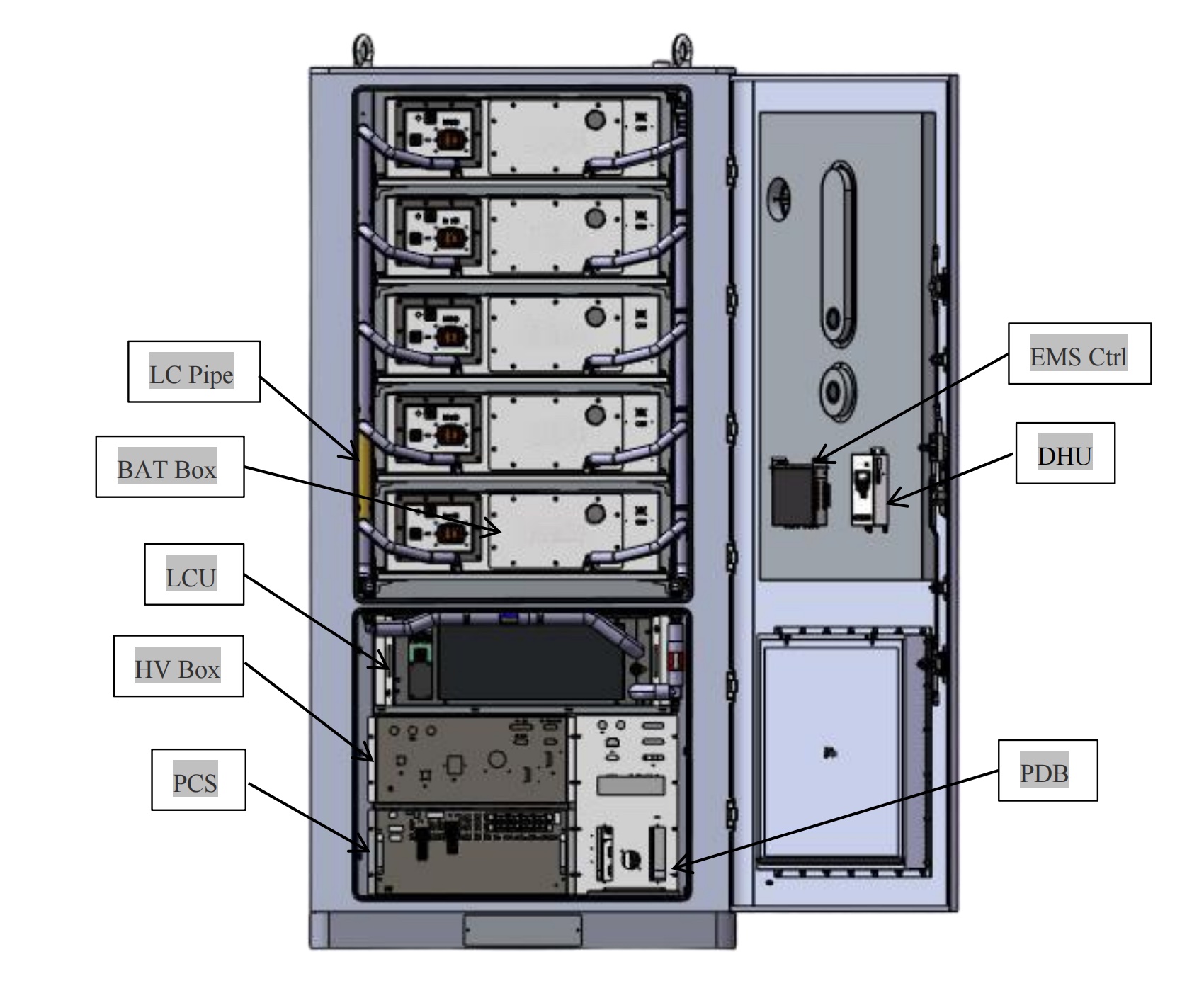
A well-designed system should integrate:
- Power Conversion System (PCS)
- Battery Management System (BMS)
- Energy Management System (EMS)
- Fire Suppression System
- Thermal Management System
- AC/DC Distribution Components
This highly integrated architecture provides several advantages:
- Faster installation
- Simplified wiring
- Reduced commissioning time
- Lower installation costs
- Improved system reliability
- Easier operation and maintenance
For European projects, it is also recommended that the EMS supports remote monitoring, fault diagnostics, cloud-based management, and Over-the-Air (OTA) firmware upgrades.
4. Safety Should Always Be the Top Priority
Safety is the most critical consideration when selecting a Battery Energy Storage System.
A premium BESS should incorporate multiple layers of protection.
Battery Safety
Choose systems equipped with high-quality Lithium Iron Phosphate (LFP) cells from leading manufacturers such as:
- CATL
- EVE Energy
- REPT Battero
- Hithium
Premium battery cells provide excellent consistency, longer service life, and enhanced operational safety.
Advanced Battery Management System (BMS)
A professional BMS should include:
- Overcharge protection
- Over-discharge protection
- Overcurrent protection
- Short-circuit protection
- Insulation monitoring
- Leakage current detection
- Active cell balancing
- State of Charge (SOC) management
- State of Health (SOH) analysis
Multi-Level Fire Protection
The system should also feature:
- Pack-level fire suppression
- Aerosol or Novec clean-agent fire extinguishing systems
- Combustible gas detection
- Smoke detection
- Temperature monitoring
- Thermal runaway early warning
These comprehensive safety measures significantly reduce operational risks and improve overall system reliability.
5. International Certifications
For projects in Europe and other international markets, certifications are often as important as the product itself.
Depending on the target market, the system should comply with internationally recognized standards such as:
- IEC 62619 – Safety requirements for secondary lithium batteries
- IEC 62477 – Safety requirements for power conversion equipment
- IEC 61000 – Electromagnetic Compatibility (EMC)
- UN38.3 – Transportation safety for lithium batteries
- CE Marking
- IEC 62933 – Electrical Energy Storage Systems
- UL 9540A – Thermal runaway fire propagation testing (required by some projects)
- VDE Certification – Required for certain German projects
- EN 50549 – Grid connection requirements in selected European countries
Comprehensive certifications facilitate project approval and ensure compliance with local regulations.
6. System Efficiency and Battery Lifetime
A high-performance energy storage system should provide excellent efficiency throughout its operating life.
Recommended performance targets include:
- Round-trip Efficiency (RTE): 88%–92%
- Battery cycle life: 6,000 to 8,000+ cycles
- Calendar life: 15–20 years under normal operating conditions
Higher efficiency reduces energy losses, lowers operating costs, and improves the overall return on investment.
7. PCS Performance Matters
The Power Conversion System (PCS) is often regarded as the "heart" of an energy storage system.
When evaluating a PCS, consider whether it offers:
- Conversion efficiency above 98.5%
- 100% unbalanced load capability
- Black start functionality
- Seamless on-grid/off-grid switching
- Reactive power compensation (SVG)
- Anti-backflow control
- Parallel operation for future expansion
- Diesel generator integration
A high-performance PCS improves system stability, operational flexibility, and future scalability.
8. Future Scalability
As energy demand continues to grow, scalability becomes increasingly important.
An ideal energy storage system should support:
- Multiple cabinets connected in parallel
- Expansion from hundreds of kilowatt-hours to several megawatt-hours
- Solar + Storage + EV Charging integration
- Microgrid applications
- Grid-connected operation
- Off-grid operation
A scalable system protects your investment and reduces future expansion costs.
9. After-Sales Service and Lifecycle Support
Beyond product quality, the supplier's service capabilities are equally important.
Consider whether the supplier offers:
- Remote monitoring platform
- OTA firmware upgrades
- Local technical support in Europe
- Spare parts availability
- Fast maintenance response
- Standard 5-year warranty with optional extension to 10 years
Comprehensive after-sales support helps minimize downtime and reduce lifecycle operating costs.
Conclusion
Selecting a premium 125kW/261kWh Commercial & Industrial Battery Energy Storage System involves much more than comparing initial purchase prices.
A truly competitive solution should provide:
- Proper matching of power and energy capacity for optimal peak shaving
- Advanced liquid cooling technology for improved efficiency and battery longevity
- Highly integrated All-in-One cabinet design
- Premium battery cells with comprehensive safety protection
- Complete international certifications for global market compliance
- High round-trip efficiency and long service life
- Advanced PCS with intelligent energy management capabilities
- Flexible scalability for future energy expansion
- Professional after-sales service and lifecycle support
For the European C&I energy storage market, the true competitive advantages lie in safety, efficiency, product quality, international certifications, and long-term service capability—not simply the initial purchase price.
A system built with CATL 314Ah LFP battery cells, a Tier-1 PCS, a reliable BMS, an advanced liquid cooling system, and comprehensive European certifications will provide superior performance, greater customer confidence, and stronger competitiveness in today's rapidly growing energy storage market.